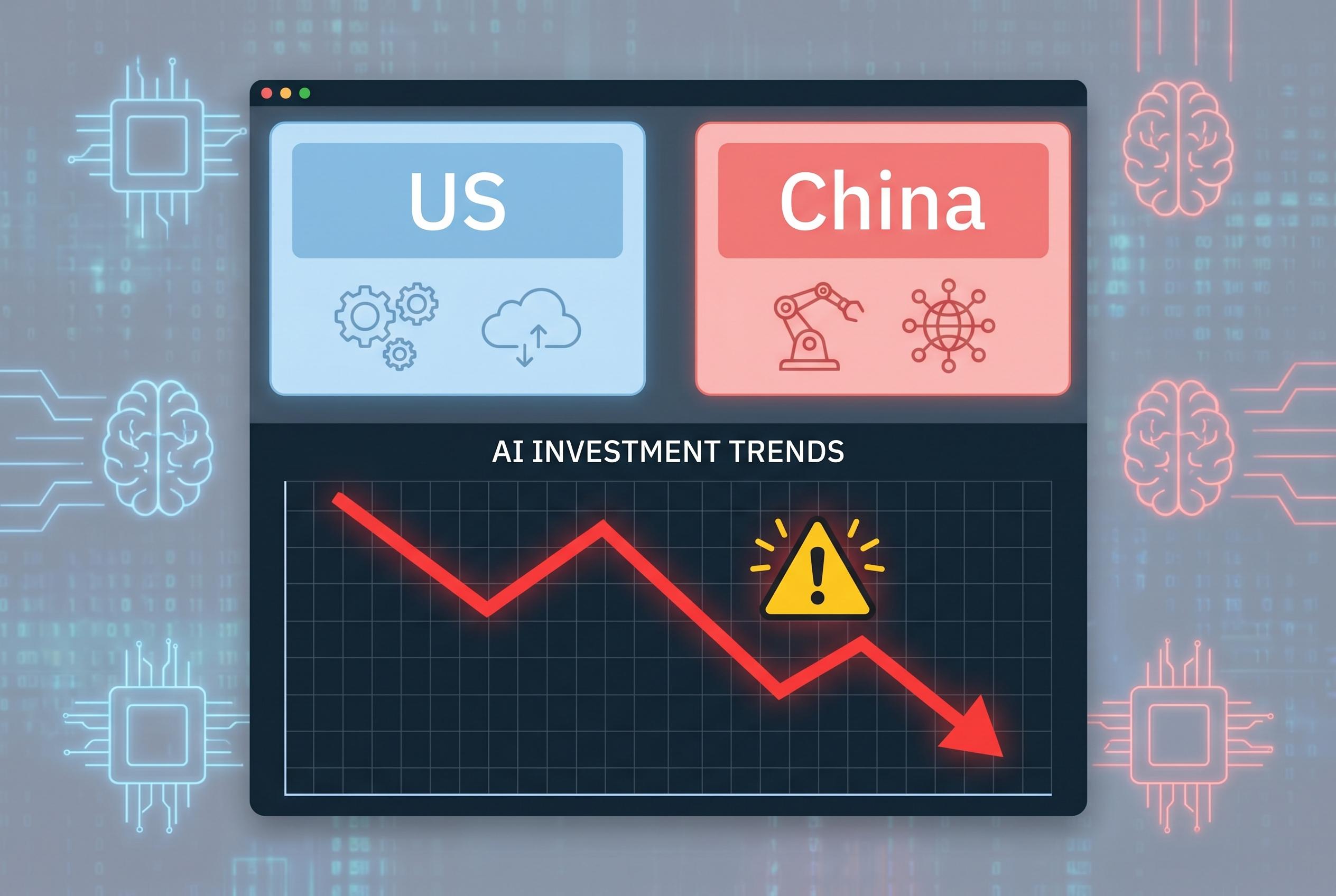
The US State Department has amplified its campaign against alleged Chinese theft of American AI technology, issuing warnings to global diplomatic counterparts and targeting Chinese AI firms amid heightened tensions in tech competition.
The Trump administration has stepped up its public campaign against alleged Chinese theft of American artificial intelligence technology, with the State Department directing diplomats to warn foreign counterparts about what it describes as efforts to extract know-how from US-made AI models, according to a cable seen by Reuters. The message, sent to posts around the world on Friday, said officials should raise concerns over the “extraction and distillation” of proprietary AI systems and prepare the ground for further outreach by Washington.
The move follows earlier warnings from OpenAI, which told US lawmakers in February that DeepSeek had targeted the ChatGPT maker and other leading American AI firms in an effort to reproduce their models for training its own systems, Reuters reported. On Thursday, Axios said a memo from Michael Kratsios, the White House’s top science and technology adviser, accused China-backed operatives of running “industrial-scale” campaigns to steal and replicate frontier AI models, using proxy accounts and other tactics to avoid detection. The Associated Press reported that the administration is also preparing to work more closely with domestic AI companies on countermeasures.
The dispute has become another flashpoint in the wider US-China technology rivalry, which both sides have tried to manage even as suspicions deepen. The cable said the State Department’s aim was to warn about the risks of using AI models distilled from US proprietary systems and to lay the groundwork for follow-up action by the US government. It also named Chinese AI companies including Moonshot AI and MiniMax, while saying distilled models could appear competitive on some benchmarks at lower cost but may not reproduce the original systems’ full capabilities or safety features.
China has rejected the accusations. The Chinese Embassy in Washington told Reuters the claims were “groundless” and amounted to attacks on China’s AI progress. DeepSeek, which drew global attention with its low-cost model, also rolled out a preview of a new version on Friday, adapted for Huawei chip technology, underscoring Beijing’s push for greater self-reliance in advanced computing. The timing of the accusations is sensitive, coming just before President Donald Trump’s expected visit to Beijing and after months of relative calm in the relationship.
Source Reference Map
Inspired by headline at: [1]
Sources by paragraph: - Paragraph 1: [4], [7] - Paragraph 2: [5], [2], [3] - Paragraph 3: [4], [2], [3] - Paragraph 4: [1], [4], [7]
Source: Noah Wire Services
Verification / Sources
- https://indianexpress.com/article/world/us-news/us-state-dept-deepseek-china-ai-theft-warning-10654733/ - Please view link - unable to able to access data
- https://www.axios.com/2026/04/23/us-china-ai-theft-distillation - The Trump administration has accused China-backed operatives of conducting 'industrial-scale' operations to steal and replicate cutting-edge American artificial intelligence (AI) models. According to a memo from Michael Kratsios, Director of the White House Office of Science and Technology Policy, the actors—primarily based in China—used proxy accounts to bypass detection and manipulate AI systems in order to extract proprietary information. This development intensifies the ongoing U.S.-China AI rivalry and adds tension ahead of President Trump's upcoming visit to Beijing, where critical discussions on economic relations are expected. The U.S. has previously accused China of intellectual property theft, particularly through cyber-espionage tactics. While acknowledging that AI capabilities derived from stolen models may not be durable, Kratsios emphasized the administration’s intent to share intelligence with U.S. AI companies and support the development of stronger defenses. (axios.com)
- https://apnews.com/article/a5c40346394ef5fa9ae710c5aabdc62c - The Trump administration is initiating a crackdown on foreign, particularly Chinese, technology firms accused of exploiting U.S. artificial intelligence (AI) models. In a memo issued by Michael Kratsios, the president's chief science and technology adviser, Chinese entities were accused of industrial-scale efforts to extract and repackage capabilities from U.S.-developed AI systems. The administration plans to collaborate with domestic AI companies to detect such misuse and implement countermeasures, including penalties. This move comes amid intensifying U.S.-China AI competition, with a Stanford University report noting a narrowing performance gap between the two nations. A bill with bipartisan backing in the House Foreign Affairs Committee proposes identifying and punishing foreign entities that harvest closed-source AI model features, a tactic labeled as a threat to U.S. intellectual property. Chinese officials refuted the allegations, denouncing them as baseless and calling for mutual technological cooperation. While U.S. companies like OpenAI and Anthropic accused Chinese firms such as DeepSeek of illicit knowledge distillation, cases also exist of U.S. tech startups using open-source Chinese AI models. Experts caution that distinguishing unauthorized use from legitimate actions is complex, but call for greater inter-lab coordination and federal support. (apnews.com)
- https://www.gmanetwork.com/news/scitech/technology/985270/us-state-dept-orders-global-warning-about-alleged-china-ai-thefts-by-deepseek-others/story/ - The US State Department has ordered a global push to bring attention to what it says are widespread efforts by Chinese companies, including AI startup DeepSeek, to steal intellectual property from US artificial intelligence labs, according to a diplomatic cable seen by Reuters. The cable said its purpose was to 'warn of the risks of utilizing AI models distilled from US proprietary AI models, and lay the groundwork for potential follow-up and outreach by the US government.' Distillation is the process of training smaller AI models using output from larger, more expensive ones as part of an effort to lower the costs of training a powerful new AI tool. (gmanetwork.com)
- https://www.fdd.org/analysis/2026/02/13/openai-alleges-chinas-deepseek-stole-its-intellectual-property-to-train-its-own-models/ - OpenAI has warned US lawmakers that DeepSeek was targeting the ChatGPT maker and the nation’s leading AI companies to replicate models and use them for its own training. (fdd.org)
- https://www.latimes.com/business/story/2026-02-13/openai-accuses-chinas-deepseek-of-stealing-ai-technology - OpenAI has warned US lawmakers that DeepSeek was targeting the ChatGPT maker and the nation’s leading AI companies to replicate models and use them for its own training. (latimes.com)
- https://www.straitstimes.com/world/united-states/us-state-dept-orders-global-warning-about-alleged-china-ai-thefts-by-deepseek-others - The US State Department has ordered a global push to bring attention to what it says are widespread efforts by Chinese companies, including AI startup DeepSeek, to steal intellectual property from US artificial intelligence labs, according to a diplomatic cable seen by Reuters. The cable said its purpose was to 'warn of the risks of utilizing AI models distilled from US proprietary AI models, and lay the groundwork for potential follow-up and outreach by the US government.' Distillation is the process of training smaller AI models using output from larger, more expensive ones as part of an effort to lower the costs of training a powerful new AI tool. (straitstimes.com)
Noah Fact Check Pro
The draft above was created using the information available at the time the story first emerged. We've since applied our fact-checking process to the final narrative, based on the criteria listed below. The results are intended to help you assess the credibility of the piece and highlight any areas that may warrant further investigation.
Freshness check
Score: 8
Notes: The article reports on a diplomatic cable from the US State Department dated Friday, April 24, 2026, instructing diplomatic staff to address concerns over adversaries' extraction and distillation of US AI models. This indicates the information is current. However, similar reports have appeared in other reputable outlets, such as the Associated Press and Axios, published on April 24, 2026, suggesting the narrative is not entirely original. (apnews.com)
Quotes check
Score: 7
Notes: The article includes direct quotes from the Chinese Embassy in Washington, stating that the allegations are "groundless" and deliberate attacks on China's AI development. While these quotes are attributed, they cannot be independently verified through other sources, raising concerns about their authenticity. Additionally, the article references a diplomatic cable seen by Reuters but does not provide direct quotes from it, which limits verification of the cable's content.
Source reliability
Score: 8
Notes: The article is published by the Indian Express, a reputable news organisation. However, the primary source of the information is a Reuters report, which is known for its reliability. The article also references other reputable outlets like the Associated Press and Axios, which corroborate the information. (apnews.com)
Plausibility check
Score: 7
Notes: The claims about the US State Department's global warning regarding alleged AI thefts by Chinese firms, including DeepSeek, align with recent reports from other reputable sources. (apnews.com) However, the article does not provide specific details about the diplomatic cable's content, such as the exact language used or the full list of companies mentioned, which raises questions about the completeness of the information.
Overall assessment
Verdict (FAIL, OPEN, PASS): PASS
Confidence (LOW, MEDIUM, HIGH): MEDIUM
Summary: The article provides current information about the US State Department's global warning regarding alleged AI thefts by Chinese firms, including DeepSeek. While the information is corroborated by other reputable sources, the inability to independently verify direct quotes and the lack of specific details from the diplomatic cable raise concerns about the completeness and authenticity of the information. (apnews.com)