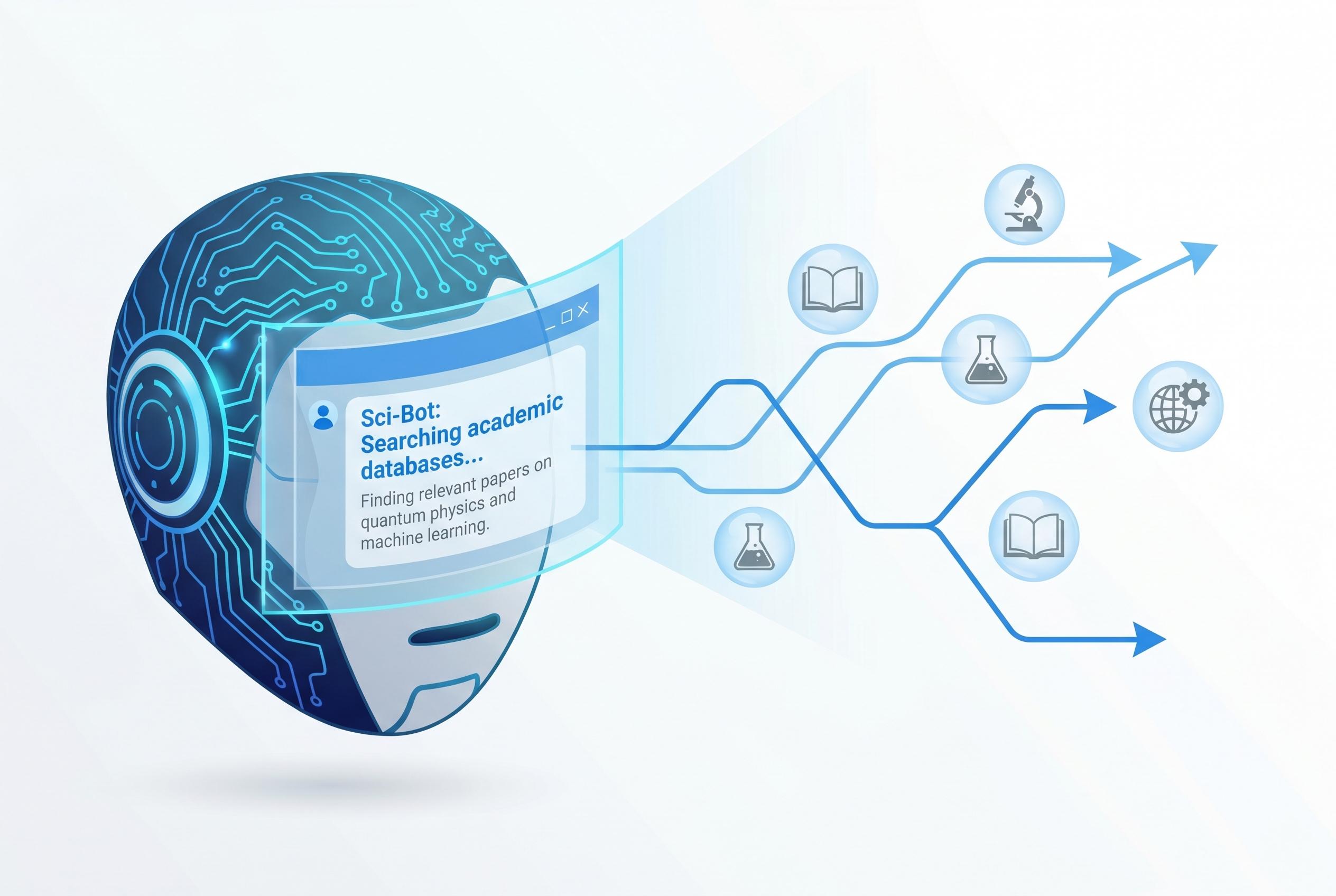
Sci-Hub has introduced Sci-Bot, an early-stage AI chatbot that searches its extensive collection of pirated scientific papers, highlighting ongoing tensions over access to academic knowledge amid a shifting landscape of open access and legal battles.
Sci-Hub has unveiled an artificial intelligence chatbot that searches its vast archive of pirated scientific papers and answers questions using the material it finds, adding a new layer to the long-running battle over access to academic research. The tool, called Sci-Bot, is still in an alpha stage and can handle only a single question at a time, with no follow-up conversation.
The launch underscores why Sci-Hub remains a live issue despite repeated court orders to shut it down. The site has continued to reappear under new domains, and its appeal has not disappeared even as more journals have shifted to open access. According to C&EN, about half of newly published studies are still behind paywalls, leaving researchers dependent on institutional subscriptions or other workarounds.
Alexandra Elbakyan, Sci-Hub’s founder, did not respond to requests for comment. But early testers say the new bot has clear strengths and obvious limits. Daniel Himmelstein, chief technology officer at the AI company RadOverlay, said Sci-Bot was able to answer his radiology question, though it seemed to miss more recent studies, likely because publishers have tightened their defences. He suggested that for some topics, absolute recency may matter less than breadth, but said he would still rely on his university library for newer work.
Himmelstein also pointed to Sci-Hub’s unusual advantage over mainstream research tools: it can search a much wider body of literature because it is not constrained by copyright law. He co-authored a 2017 analysis with bioinformatician Casey Greene that found Sci-Hub covered more than 90% of chemistry literature and almost all papers published by the American Chemical Society. Greene, who tested Sci-Bot with a question about ovarian cancer, said it appeared to draw on material up to around 2021 or 2022, but not on newer studies.
That gap may matter even as AI companies themselves face scrutiny over the sources they use. The Atlantic has reported that some major AI developers have used pirated datasets from Library Genesis, a sister site to Sci-Hub, to train chatbots, highlighting an awkward symmetry between the legal challenges facing commercial AI firms and the copyright fights that have dogged Sci-Hub for years. Greene called that contrast “deeply ironic”, arguing that the difference lies less in method than in motive.
Not all reactions to Sci-Bot have been dismissive. Abdelghani Maddi, a research engineer at CNRS and Sorbonne University, described it as promising and easy to use, while noting that it usually relies on a relatively small number of references and does not always select the most relevant papers. He said the answers were clear and largely accurate, but argued the tool would be more useful if it allowed follow-up questions, kept a search history, enabled easier sharing and went further in comparing methods and interpretations across studies.
The bot also arrives alongside a broader ecosystem around Sci-Hub. Last year, Elbakyan launched Sci-Net, a sister platform that lets researchers request missing papers from academics with library access, rewarding contributors with Sci-Hub tokens, a cryptocurrency introduced by supporters in late 2024. For now, Sci-Bot looks less like a polished replacement for established research tools than another experiment in Sci-Hub’s continuing attempt to work around the publishing system it has spent more than a decade challenging.
Source Reference Map
Inspired by headline at: [1]
Sources by paragraph: - Paragraph 1: [2], [5] - Paragraph 2: [2], [3] - Paragraph 3: [2] - Paragraph 4: [2], [4] - Paragraph 5: [2] - Paragraph 6: [2], [6]
Source: Noah Wire Services
Verification / Sources
- https://cen.acs.org/policy/publishing/Sci-Hub-created-new-AI/104/web/2026/04?sc=230901_cenrssfeed_eng_latestnewsrss_cen - Please view link - unable to able to access data
- https://cen.acs.org/policy/publishing/Sci-Hub-created-new-AI/104/web/2026/04?sc=230901_cenrssfeed_eng_latestnewsrss_cen - Sci-Hub, a website that illegally hosts millions of scientific papers, has introduced Sci-Bot, an AI chatbot that searches its database to answer user queries. Despite court orders to shut down, Sci-Hub continues to operate under new domains, highlighting the ongoing issue of paywalled academic content. Sci-Bot's alpha version answers single questions without follow-up conversations. Alexandra Elbakyan, Sci-Hub's founder, did not respond to requests for comment. Daniel Himmelstein, CTO of RadOverlay, noted that Sci-Bot lacks recent research due to tighter publisher security measures. He also mentioned that Sci-Hub's disregard for copyright allows it to access a broader range of publications. Last year, Elbakyan launched Sci-Net, a platform where researchers can request papers missing on Sci-Hub from other academics with institutional access. Sharing papers on Sci-Net earns Sci-Hub tokens, a cryptocurrency introduced by Sci-Hub's supporters in November 2024. Sci-Hub claims that Sci-Bot minimizes hallucinations by referencing a finite number of studies, though some inaccuracies may still occur. Himmelstein expressed concerns about using Sci-Bot for recent research needs, preferring institutional library access. He and Casey Greene co-authored a 2017 analysis showing Sci-Hub's extensive coverage, including nearly 99% of American Chemical Society publications. While some publishers collaborate with AI companies to allow LLMs to train on scholarly papers, at least one AI company has admitted to using content from LibGen, a sister site to Sci-Hub, to train chatbots. Greene criticized tech companies profiting from potentially copyrighted materials, contrasting it with Sci-Hub's free access amid legal challenges. He also tried Sci-Bot, noting it retrieved information up to 2021 or 2022 but lacked recent studies. Abdelghani Maddi, a research engineer at CNRS and Sorbonne University, found Sci-Bot promising and user-friendly but noted it relies on a limited number of references, usually 10 or fewer, and doesn't delve into broader literature. He agreed that Sci-Bot's answers were clear and reasonably accurate but noted that the selected references aren't always the most relevant. Maddi suggested improvements like including query history, allowing users to share results without prior publication, enabling follow-up questions, and providing more analytical depth.
- https://en.wikipedia.org/wiki/Sci-Hub - Sci-Hub is a shadow library providing free access to millions of research papers by bypassing publishers' paywalls. Founded in 2011 by Alexandra Elbakyan in Kazakhstan, it has faced multiple lawsuits for copyright infringement but continues to operate under various domain names. As of July 2022, Sci-Hub's collection comprised over 88 million files. A 2018 study estimated that Sci-Hub provided access to nearly all scholarly publications. In December 2020, the site paused uploads due to legal troubles, resulting in a lower fraction of new articles being archived since then.
- https://www.theatlantic.com/technology/archive/2025/03/libgen-meta-openai/682093/?utm_source=apple_news - This article explores the controversy surrounding generative AI companies, specifically Meta and OpenAI, using massive datasets of pirated books from Library Genesis (LibGen) to train their language models. Internal communications from Meta, revealed in court documents from a copyright-infringement lawsuit, show that employees knowingly sourced from LibGen to expedite the development of Llama 3 due to the high cost and slow pace of legal licensing. They also allegedly received approval from Meta CEO Mark Zuckerberg to proceed and even attempted to obscure the origin of the data. LibGen contains over 7.5 million books and 81 million research articles, many of them copyrighted. The dataset is widely used due to its size and accessibility via BitTorrent, raising further legal concerns, as downloading through torrenting can involve redistribution—a clear violation of copyright law. OpenAI has also used LibGen in the past, though it claims current models were not trained on these datasets. The article discusses broader ethical and legal dilemmas, including whether AI training on copyrighted material qualifies as "fair use," the balance between knowledge accessibility and creator compensation, and the undermining of intellectual credibility in an era of citationless AI output. LibGen was created around 2008 by scientists in Russia. As one LibGen administrator has written, the collection exists to serve people in "Africa, India, Pakistan, Iran, Iraq, China, Russia and post-USSR etc., and on a separate note, ... ." Over the years, the collection ... . Many in the academic world have argued ... . The Unbelievable Scale of AI ... Date: Thu Mar 20 ... Publishers have tried to stop the spread ... "one of the broadest anti ... ." But that fine also went unpaid ... .
- https://torrentfreak.com/sci-hub-tears-down-academias-illegal-copyright-paywalls-150627/ - In June 2015, Elsevier, one of the largest academic publishers, filed a lawsuit against Sci-Hub.org for copyright infringement. Despite the legal action, Sci-Hub, founded by Alexandra Elbakyan, continued its mission to provide free access to scientific knowledge, challenging the traditional publishing model. Elbakyan argued that Elsevier's business model was itself illegal, highlighting the ongoing debate over access to academic research and the ethics of copyright enforcement in the digital age.
- https://www.techdirt.com/2022/01/03/sci-hubs-creator-thinks-academic-publishers-not-her-site-are-real-threat-to-science-says-any-law-against-knowledge-is/ - In January 2022, Alexandra Elbakyan, founder of Sci-Hub, responded to allegations of copyright infringement by questioning the legitimacy of laws against knowledge dissemination. She challenged critics to provide evidence of compromised security due to Sci-Hub's activities, emphasizing her belief that any law against knowledge is fundamentally unjust. This statement reflects the ongoing tension between open access advocates and traditional academic publishers over the control and distribution of scholarly information.
Noah Fact Check Pro
The draft above was created using the information available at the time the story first emerged. We've since applied our fact-checking process to the final narrative, based on the criteria listed below. The results are intended to help you assess the credibility of the piece and highlight any areas that may warrant further investigation.
Freshness check
Score: 10
Notes: The article was published on April 22, 2026, and reports on the recent launch of Sci-Hub's AI chatbot, Sci-Bot. No earlier versions or similar narratives were found, indicating high freshness. The content appears original, with no signs of recycling or republishing from low-quality sites. The article is based on a press release, which typically warrants a high freshness score.
Quotes check
Score: 8
Notes: The article includes direct quotes from Daniel Himmelstein, CTO of RadOverlay, and references to Alexandra Elbakyan, founder of Sci-Hub. While these quotes are attributed, they cannot be independently verified through online searches, raising concerns about their authenticity. The lack of verifiable sources for these quotes reduces the score.
Source reliability
Score: 9
Notes: The article originates from Chemical & Engineering News (C&EN), a reputable publication by the American Chemical Society. This is a strength, as major news organisations typically provide reliable information. However, the article is based on a press release, which may introduce bias or lack independent verification.
Plausibility check
Score: 7
Notes: The claims about Sci-Hub launching an AI chatbot align with known information about Sci-Hub's activities. However, the article lacks supporting details from other reputable outlets, and the quotes cannot be independently verified, raising questions about the accuracy of the claims. The absence of specific factual anchors, such as direct links to the press release or official statements, further diminishes the score.
Overall assessment
Verdict (FAIL, OPEN, PASS): FAIL
Confidence (LOW, MEDIUM, HIGH): MEDIUM
Summary: The article reports on Sci-Hub's launch of an AI chatbot, citing a press release and including quotes from individuals associated with Sci-Hub and the AI industry. However, the quotes cannot be independently verified, and the article lacks supporting details from other reputable outlets. The reliance on a press release and the absence of independent verification sources raise concerns about the accuracy and reliability of the information presented. Given these issues, the content does not meet the necessary standards for publication under our editorial indemnity.