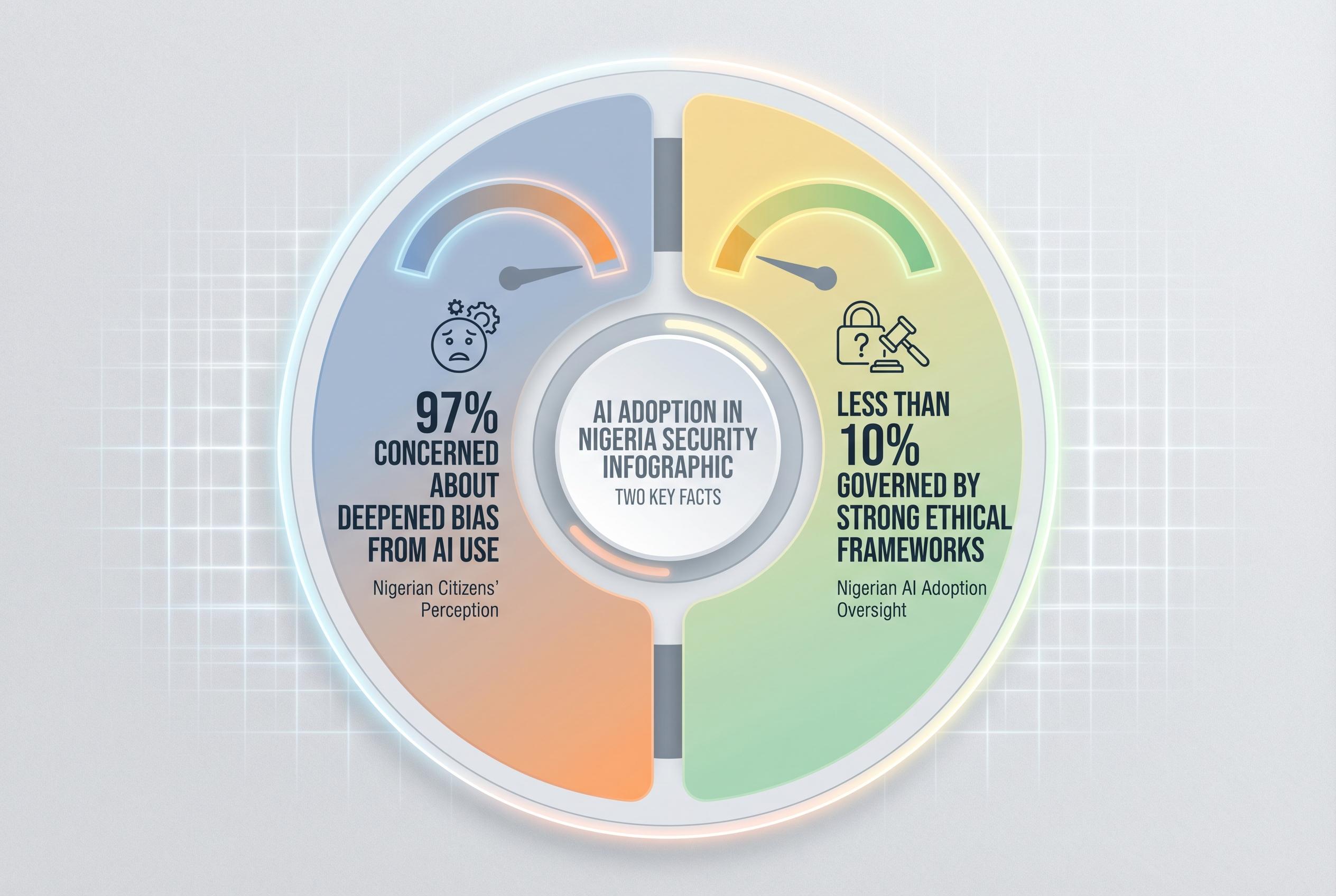
Security experts and stakeholders in Nigeria warn that without proper rules, training, and safeguards, artificial intelligence could deepen biases and undermine justice. The country must build strong institutions and ethical frameworks before widespread adoption of AI in crime fighting.
Security experts and justice-sector stakeholders have warned Nigerian agencies against rushing into artificial intelligence-led crime fighting without the rules, training and safeguards needed to keep it accountable. At a roundtable in Abuja on readiness for AI in security-sector reform and governance, speakers argued that the technology could sharpen policing, but only if it is matched by clear institutions, ethical standards and broader public oversight.
Peter Maduoma, executive director of the CLEEN Foundation, said the real issue was no longer whether AI would affect security work, but whether Nigeria was prepared to use it responsibly. He said adoption would require stronger institutions, legal and ethical guardrails, skilled personnel and sustained funding, warning that the benefits of faster analysis and improved responsiveness could be undermined by bias, intrusive surveillance, privacy risks and weak regulation.
In a separate paper presentation, criminology professor Etannibi Alemika cautioned that AI in criminal justice could deepen injustice if its limits were not widely understood. He said poor and marginalised people could be especially exposed to harm if automated systems were used without proper scrutiny, adding that the key questions were where AI should be applied, how it should be used and how decision-makers should interpret its outputs.
The Nigeria Police Force also signalled interest in the technology, saying it sees value in AI and other digital tools for intelligence gathering, predictive policing and operational efficiency. But a representative for Inspector General of Police Tunji Disu said those gains must be balanced with respect for human rights, ethical standards and public trust, with the force committed to upgrading its institutions, training officers and aligning with global best practice.
Researchers and policy experts have made similar arguments in recent work on AI and crime prevention in Nigeria, saying the technology could strengthen law enforcement if backed by investment in infrastructure, capacity building and clear rules. Their concern mirrors the broader debate now emerging in Abuja: not whether AI should enter the security sector, but whether the country can govern it well enough to prevent new forms of abuse.
Source Reference Map
Inspired by headline at: [1]
Sources by paragraph: - Paragraph 1: [1], [2] - Paragraph 2: [1], [2] - Paragraph 3: [1] - Paragraph 4: [1] - Paragraph 5: [2]
Source: Noah Wire Services
Verification / Sources
- https://guardian.ng/news/stakeholders-caution-security-agencies-on-ai-deployment-in-tackling-crime/ - Please view link - unable to able to access data
- https://www.researchgate.net/publication/393086143_The_Impact_of_Artificial_Intelligence_AI_In_Crime_Detection_and_Prevention_in_Nigeria - This study examines the impact of Artificial Intelligence (AI) on crime detection and prevention in Nigeria. It highlights the potential of AI to enhance law enforcement capabilities but also underscores the necessity for robust institutional frameworks, clear legal and ethical guidelines, and adequate human capacity to mitigate risks such as algorithmic bias and data privacy concerns. The research advocates for increased investment in AI infrastructure and capacity building to ensure responsible and effective deployment in the security sector.
- https://www.researchgate.net/publication/393086143_The_Impact_of_Artificial_Intelligence_AI_In_Crime_Detection_and_Prevention_in_Nigeria - This study examines the impact of Artificial Intelligence (AI) on crime detection and prevention in Nigeria. It highlights the potential of AI to enhance law enforcement capabilities but also underscores the necessity for robust institutional frameworks, clear legal and ethical guidelines, and adequate human capacity to mitigate risks such as algorithmic bias and data privacy concerns. The research advocates for increased investment in AI infrastructure and capacity building to ensure responsible and effective deployment in the security sector.
- https://www.researchgate.net/publication/393086143_The_Impact_of_Artificial_Intelligence_AI_In_Crime_Detection_and_Prevention_in_Nigeria - This study examines the impact of Artificial Intelligence (AI) on crime detection and prevention in Nigeria. It highlights the potential of AI to enhance law enforcement capabilities but also underscores the necessity for robust institutional frameworks, clear legal and ethical guidelines, and adequate human capacity to mitigate risks such as algorithmic bias and data privacy concerns. The research advocates for increased investment in AI infrastructure and capacity building to ensure responsible and effective deployment in the security sector.
- https://www.researchgate.net/publication/393086143_The_Impact_of_Artificial_Intelligence_AI_In_Crime_Detection_and_Prevention_in_Nigeria - This study examines the impact of Artificial Intelligence (AI) on crime detection and prevention in Nigeria. It highlights the potential of AI to enhance law enforcement capabilities but also underscores the necessity for robust institutional frameworks, clear legal and ethical guidelines, and adequate human capacity to mitigate risks such as algorithmic bias and data privacy concerns. The research advocates for increased investment in AI infrastructure and capacity building to ensure responsible and effective deployment in the security sector.
- https://www.researchgate.net/publication/393086143_The_Impact_of_Artificial_Intelligence_AI_In_Crime_Detection_and_Prevention_in_Nigeria - This study examines the impact of Artificial Intelligence (AI) on crime detection and prevention in Nigeria. It highlights the potential of AI to enhance law enforcement capabilities but also underscores the necessity for robust institutional frameworks, clear legal and ethical guidelines, and adequate human capacity to mitigate risks such as algorithmic bias and data privacy concerns. The research advocates for increased investment in AI infrastructure and capacity building to ensure responsible and effective deployment in the security sector.
- https://www.researchgate.net/publication/393086143_The_Impact_of_Artificial_Intelligence_AI_In_Crime_Detection_and_Prevention_in_Nigeria - This study examines the impact of Artificial Intelligence (AI) on crime detection and prevention in Nigeria. It highlights the potential of AI to enhance law enforcement capabilities but also underscores the necessity for robust institutional frameworks, clear legal and ethical guidelines, and adequate human capacity to mitigate risks such as algorithmic bias and data privacy concerns. The research advocates for increased investment in AI infrastructure and capacity building to ensure responsible and effective deployment in the security sector.
Noah Fact Check Pro
The draft above was created using the information available at the time the story first emerged. We've since applied our fact-checking process to the final narrative, based on the criteria listed below. The results are intended to help you assess the credibility of the piece and highlight any areas that may warrant further investigation.
Freshness check
Score: 8
Notes: The article was published on 15 April 2026. A search for similar narratives revealed no substantially similar content published more than 7 days earlier. However, the topic of AI in Nigerian security has been covered in recent months, such as the article 'AI platform to mitigate security breaches' published on 7 January 2026. (guardian.ng)
Quotes check
Score: 7
Notes: The article includes direct quotes from Peter Maduoma, executive director of the CLEEN Foundation, and criminology professor Etannibi Alemika. A search for these quotes did not yield earlier instances, suggesting they are original. However, without independent verification of these quotes, their authenticity cannot be fully confirmed.
Source reliability
Score: 9
Notes: The article originates from The Guardian Nigeria, a reputable news organisation. The content appears to be original reporting rather than summarised or aggregated from other sources. However, the article does not provide direct links to the original sources of the quotes, which limits the ability to verify the information independently.
Plausibility check
Score: 8
Notes: The claims made in the article align with ongoing discussions about AI's role in Nigerian security. For instance, the article 'AI-driven transformation exposes organisations to new risks' published on 11 February 2026 discusses similar concerns. (guardian.ng) However, the article lacks specific details such as dates, institutions, or direct links to the original sources of the quotes, which would enhance its credibility.
Overall assessment
Verdict (FAIL, OPEN, PASS): OPEN
Confidence (LOW, MEDIUM, HIGH): MEDIUM
Summary: While the article presents plausible and timely information on AI's role in Nigerian security, the lack of direct links to original sources and independent verification of quotes raises concerns about its credibility. (guardian.ng)