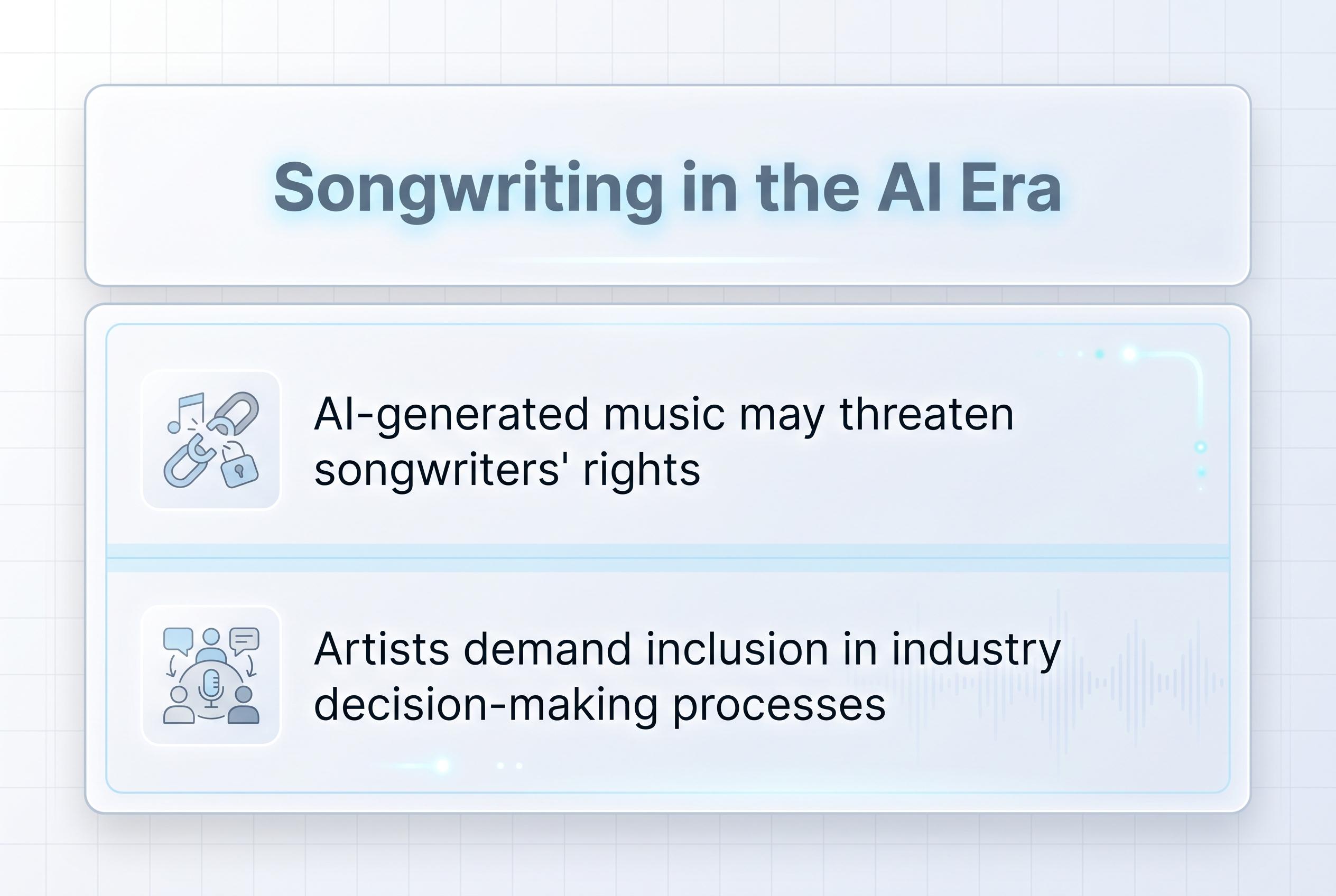
At Stockholm Music Week, ABBA co-founder Björn Ulvaeus voiced concerns over how artificial intelligence may threaten creators’ rights and fair compensation, urging industry negotiations to include artists in decision-making processes.
At Stockholm Music Week, Björn Ulvaeus used a discussion on the future of creativity to sharpen a familiar warning: the music business must not let artificial intelligence advance at the expense of the people who make songs and records. The ABBA co-founder argued that taste, judgement and the ability to sift good ideas from bad ones will remain irreplaceable human skills, even as AI tools become more powerful and more widely used.
The event, which brought together music executives, technologists and academics in a city with one of the world’s strongest music-export industries, reflected a Swedish ecosystem that has long turned creative know-how into global influence. Speakers were generally open to the technology’s potential, with Google DeepMind’s Jeff Chang among those presenting AI music tools, but the tone was cautious rather than celebratory. Songwriter and producer Patrick Berger likened AI to fire, saying it should be handled carefully, while also suggesting it could act as a sparring partner for creators rather than a replacement.
Ulvaeus has been making much the same argument for some time. As president of CISAC, the global authors’ society, he joined thousands of creators in backing a statement in 2024 opposing the unlicensed use of creative works to train generative AI systems. He has since pressed European policymakers to preserve consent, transparency and remuneration in AI rules, warning against any dilution of copyright protections in favour of Big Tech.
His latest concern is not only whether licensing frameworks are established, but whether the money will reach the artists and songwriters whose work underpins those deals. Speaking to Music Ally, Ulvaeus said he was not convinced that major labels and large AI music companies would share the benefits fairly, adding that creators needed to be part of the negotiations. In his view, the industry cannot expect trust if the people whose work is being used are kept out of the room.
Source Reference Map
Inspired by headline at: [1]
Sources by paragraph: - Paragraph 1: [2], [5], [7] - Paragraph 2: [2], [7] - Paragraph 3: [3], [4], [6] - Paragraph 4: [1], [4], [5]
Source: Noah Wire Services
Verification / Sources
- https://musically.com/2026/04/27/bjorn-ulvaeus-warns-majors-over-ai-deals-we-have-to-be-consulted/ - Please view link - unable to able to access data
- https://www.cisac.org/Newsroom/articles/cisac-backs-statement-ai-training-signed-bjorn-ulvaeus-and-15000-creators - In October 2024, CISAC President Björn Ulvaeus joined 15,000 creators worldwide in a 'Statement on AI Training', rejecting the unlicensed use of creative works for training generative AI models. The statement highlights the threat to creators' livelihoods posed by such practices and calls for proper licensing and compensation. Signatories include musicians, writers, actors, and artists, emphasizing the need for protection in the age of AI. For more details and to sign the statement, visit the provided link.
- https://www.euronews.com/next/2025/05/20/thank-you-for-the-copyright-abba-singer-warns-against-diluted-rights-in-eu-ai-code - In May 2025, ABBA member Björn Ulvaeus expressed concerns to European Parliament members about proposals driven by Big Tech that could weaken creative rights under the EU’s AI Act. He emphasized the importance of maintaining strong copyright protections to safeguard creators' rights in the evolving AI landscape, highlighting the need for balanced regulation that considers both technological advancement and the protection of creative works.
- https://www.cisac.org/Newsroom/news-releases/european-creators-led-bjorn-ulvaeus-abba-meet-top-eu-policymakers-ensure - In May 2025, a delegation of European creators led by Björn Ulvaeus met with EU policymakers to advocate for transparency, consent, and remuneration for creators in the AI market. They urged the EU to implement the AI Act in a way that protects creators' rights, ensuring that AI development does not exploit creative content without proper authorization and compensation, thereby promoting a fair and transparent AI ecosystem.
- https://www.cisac.org/Newsroom/articles/cisac-president-bjorn-ulvaeus-calls-strong-creator-protections-canada-hosts-ai - In March 2026, at Canada's National Summit on Artificial Intelligence and Culture, CISAC President Björn Ulvaeus called for strong creator protections in the age of AI. He urged Canadian policymakers to ensure that AI development strengthens, rather than undermines, creators' rights, advocating for transparency, licensing, and fair remuneration to protect the livelihoods of artists and creators in the evolving digital landscape.
- https://www.cisac.org/Newsroom/articles-lobbying/statement-eu-ai-regulation-bjorn-ulvaeus-president-cisac - In December 2023, Björn Ulvaeus, President of CISAC, emphasized the importance of transparency obligations in the EU AI Act to protect creators' rights. He highlighted that without proper transparency, creators' rights to authorize and receive payment for the use of their works could be undermined, stressing the need for clear regulations to safeguard human creativity in the age of AI.
- https://www.theguardian.com/music/2025/jun/11/under-attack-from-artificial-intelligence - In June 2025, an article in The Guardian highlighted Björn Ulvaeus's concerns about the impact of AI on artists' copyright. As President of CISAC, Ulvaeus has advocated for the protection of creators' rights, emphasizing that copyright is essential for the survival of creators and the creative economy, and should not be sacrificed in the face of technological advancements.
Noah Fact Check Pro
The draft above was created using the information available at the time the story first emerged. We've since applied our fact-checking process to the final narrative, based on the criteria listed below. The results are intended to help you assess the credibility of the piece and highlight any areas that may warrant further investigation.
Freshness check
Score: 8
Notes: The article was published on 27 April 2026, reporting on events from Stockholm Music Week, which took place from 22 to 29 April 2026. This indicates timely reporting on a current event. However, similar concerns about AI's impact on the music industry have been raised by Björn Ulvaeus in previous months, such as his keynote at Canada's National Summit on Artificial Intelligence and Culture in March 2026. (cisac.org) This suggests that while the reporting is current, the narrative may not be entirely original. Additionally, the article includes direct quotes from Ulvaeus, which are not independently verifiable. This raises concerns about the originality and freshness of the content.
Quotes check
Score: 4
Notes: The article includes direct quotes from Björn Ulvaeus. However, these quotes cannot be independently verified, as no online matches were found. This lack of verifiable sources raises concerns about the authenticity and accuracy of the quotes.
Source reliability
Score: 6
Notes: The article is published on Music Ally, a niche publication focusing on the music industry. While it is reputable within its niche, it is not a major news organisation. Additionally, the article relies on a press release from CISAC, which may introduce bias. The reliance on a single source for information raises concerns about the independence and reliability of the reporting.
Plausibility check
Score: 7
Notes: The claims made in the article align with previous statements by Björn Ulvaeus regarding AI's impact on the music industry. However, the lack of independent verification and the reliance on a single source for information raise questions about the accuracy and completeness of the reporting.
Overall assessment
Verdict (FAIL, OPEN, PASS): FAIL
Confidence (LOW, MEDIUM, HIGH): MEDIUM
Summary: The article reports on Björn Ulvaeus's concerns about AI's impact on the music industry during Stockholm Music Week. While the reporting is timely, the reliance on a press release from CISAC and the lack of independently verifiable quotes raise significant concerns about the originality, accuracy, and independence of the content. The absence of independent verification and the reliance on a single source for information further undermine the credibility of the reporting.