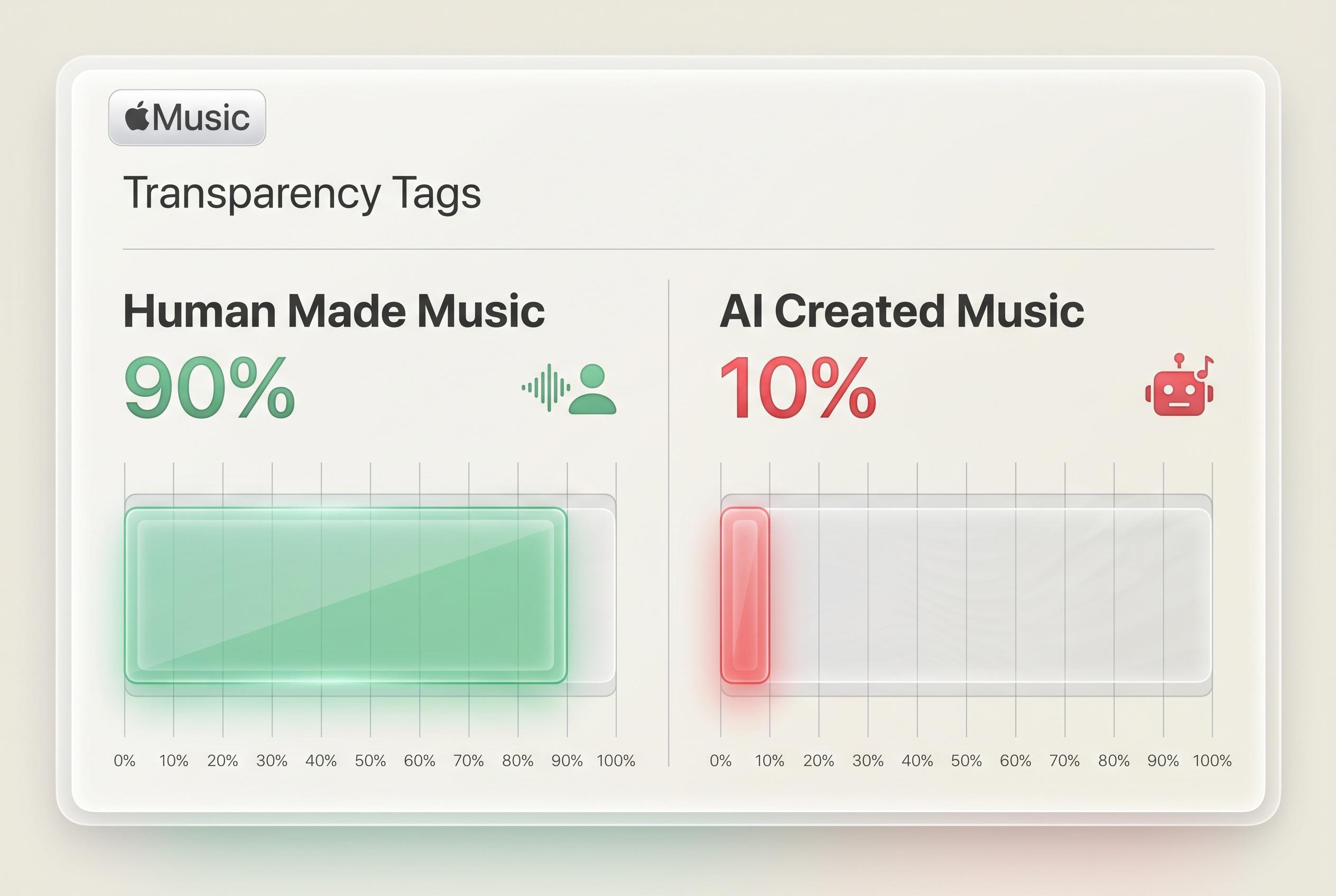
Apple Music introduces 'Transparency Tags' to encourage labels and distributors to disclose AI use in music creation, aiming for industry-wide norms amid rising synthetic music and fraud concerns.
Apple Music is pushing the music industry to police its own use of artificial intelligence, with vice president Oliver Schusser saying labels and distributors must be the ones to disclose how tracks are made. In an interview with Billboard's "On The Record", he argued that the responsibility sits with the companies delivering the music, not with Apple, as the platform rolls out a new metadata system designed to flag AI involvement.
The system, called "Transparency Tags", is intended to record where AI has been used across four parts of a release: the sound recording, the composition, the artwork and the music video. According to reports from MacRumors, SoundGuys and MusicRadar, the tags are being introduced as a voluntary disclosure tool for now, with Apple encouraging content providers to be open about how a song was created and to help establish industry-wide norms.
Apple’s approach appears to be deliberately administrative rather than punitive. Rather than relying on automated detection to scan every upload, the company is asking the parties closest to the recording process to provide the information themselves. Schusser said labels are best placed to know how a track was produced, and he stressed that Apple wants a searchable record of AI use without turning the platform into a policing operation.
The move also comes against a wider backdrop of concern over synthetic music and fraud on streaming services. Apple Insider reported that Schusser said more than a third of tracks delivered to Apple Music are now "100% AI", yet they account for less than 0.5% of listening, suggesting that generated music is arriving in volume but attracting little audience demand. Separately, DJ Mag reported that Apple Music demonetised two billion fraudulent streams in 2025, worth about $17 million in potential royalties, underscoring the platform's growing focus on integrity, disclosure and fair compensation.
Source Reference Map
Inspired by headline at: [1]
Sources by paragraph: - Paragraph 1: [2], [7] - Paragraph 2: [2], [6], [7] - Paragraph 3: [3] - Paragraph 4: [3], [4], [5]
Source: Noah Wire Services
Verification / Sources
- https://www.iphoneincanada.ca/2026/04/24/labels-must-disclose-ai-generated-songs-on-apple-music/?utm_source=rss&utm_medium=rss&utm_campaign=labels-must-disclose-ai-generated-songs-on-apple-music - Please view link - unable to able to access data
- https://www.macrumors.com/2026/03/05/apple-music-ai-transparency-tags/ - Apple Music is introducing 'Transparency Tags', a new metadata system that allows labels and distributors to disclose AI involvement in music creation. This initiative covers four key areas: sound recording, composition, visual artwork, and music video. The tags are currently optional, with Apple encouraging content providers to take an active role in reporting AI-generated content. This move aims to establish industry-wide best practices and create a transparent database of AI usage in music production. The system is voluntary for now, with no enforcement or cross-verification process in place. (macrumors.com)
- https://www.appleinsider.com/articles/26/04/23/ai-songs-are-flooding-apple-music-but-nobody-is-actually-listening-to-them - Apple Music Vice President Oliver Schusser revealed that over a third of tracks delivered to the platform are '100% AI', yet these account for less than 0.5% of total usage. Despite the surge in AI-generated music, listener engagement remains minimal. Apple is proactively addressing this by developing in-house technology to monitor AI usage in submissions and requiring labels and distributors to disclose AI involvement. This approach aims to maintain the platform's integrity and promote a healthy creative ecosystem. (appleinsider.com)
- https://djmag.com/news/apple-music-demonetised-two-billion-fraudulent-streams-2025-vp-reveals - In 2025, Apple Music identified and demonetised two billion fraudulent streams, amounting to approximately $17 million in royalties that could have been directed to legitimate artists. This action underscores the platform's commitment to combating streaming fraud and ensuring fair compensation for artists. The penalties for fraudsters have been increased, with fines now ranging from 10% to 50% of the royalties that would have been earned by legitimate artists. (djmag.com)
- https://routenote.com/blog/apple-music-ai-music-low-streams/ - Apple Music has observed a significant rise in AI-generated music uploads, with over a third of tracks delivered being '100% AI'. However, listener engagement with this content remains extremely low, accounting for less than 0.5% of total usage. This disparity highlights the challenges in integrating AI-generated music into the platform and the need for effective strategies to promote such content to listeners. (routenote.com)
- https://www.soundguys.com/apple-music-transparency-tags-154089/ - Apple Music has launched 'Transparency Tags', a new feature that allows labels and distributors to disclose AI involvement in music creation. This system covers four areas: artwork, track, composition, and music video. While the tags are currently optional, Apple encourages content providers to take an active role in reporting AI-generated content. This initiative aims to improve transparency and establish industry-wide best practices for AI usage in music production. (soundguys.com)
- https://www.musicradar.com/music-tech/we-believe-labels-and-distributors-must-take-an-active-role-in-reporting-apple-music-announces-a-new-tagging-system-for-ai-generated-music - Apple Music has announced a new tagging system called 'Transparency Tags' to disclose AI-generated music. The tags cover four main elements: artwork, track, composition, and music video. Labels and distributors can apply these tags immediately and will be required to use them when delivering new content in the future. This initiative aims to provide greater transparency regarding AI-generated music and encourages labels and distributors to take an active role in reporting. (musicradar.com)
Noah Fact Check Pro
The draft above was created using the information available at the time the story first emerged. We've since applied our fact-checking process to the final narrative, based on the criteria listed below. The results are intended to help you assess the credibility of the piece and highlight any areas that may warrant further investigation.
Freshness check
Score: 8
Notes: The article references a recent interview with Apple Music VP Oliver Schusser, published on April 22, 2026. (appleinsider.com) The concept of 'Transparency Tags' was previously reported on March 5, 2026. While the core information is recent, the foundational concept has been in the public domain for over a month, which may affect the perceived novelty of the content.
Quotes check
Score: 7
Notes: Direct quotes from Oliver Schusser are used in the article. However, these quotes are sourced from the April 22, 2026 interview. (appleinsider.com) The same quotes appear in other articles, indicating potential reuse. (iphoneincanada.ca) This raises concerns about the originality of the content and the possibility of recycled material.
Source reliability
Score: 6
Notes: The primary source is an interview with Oliver Schusser, reported by AppleInsider. (appleinsider.com) AppleInsider is a reputable outlet, but it is not a major news organisation like the BBC or Reuters. The article also references other sources, including iPhone in Canada and MacRumors, which are less established. This mix of sources may affect the overall reliability of the information presented.
Plausibility check
Score: 8
Notes: The claims about AI-generated music comprising over a third of submissions to Apple Music, yet accounting for less than 0.5% of listening, are plausible and align with industry trends. (appleinsider.com) However, the article does not provide specific data or studies to substantiate these figures, which would strengthen the credibility of the claims.
Overall assessment
Verdict (FAIL, OPEN, PASS): FAIL
Confidence (LOW, MEDIUM, HIGH): MEDIUM
Summary: The article presents information about Apple Music's 'Transparency Tags' for AI-generated music, referencing a recent interview with Oliver Schusser. However, the content appears to be recycled from other sources, with direct quotes reused across multiple articles. The reliance on less established sources and the lack of independent verification further diminish the credibility of the information presented. Given these concerns, the article does not meet the necessary standards for publication under our editorial indemnity.