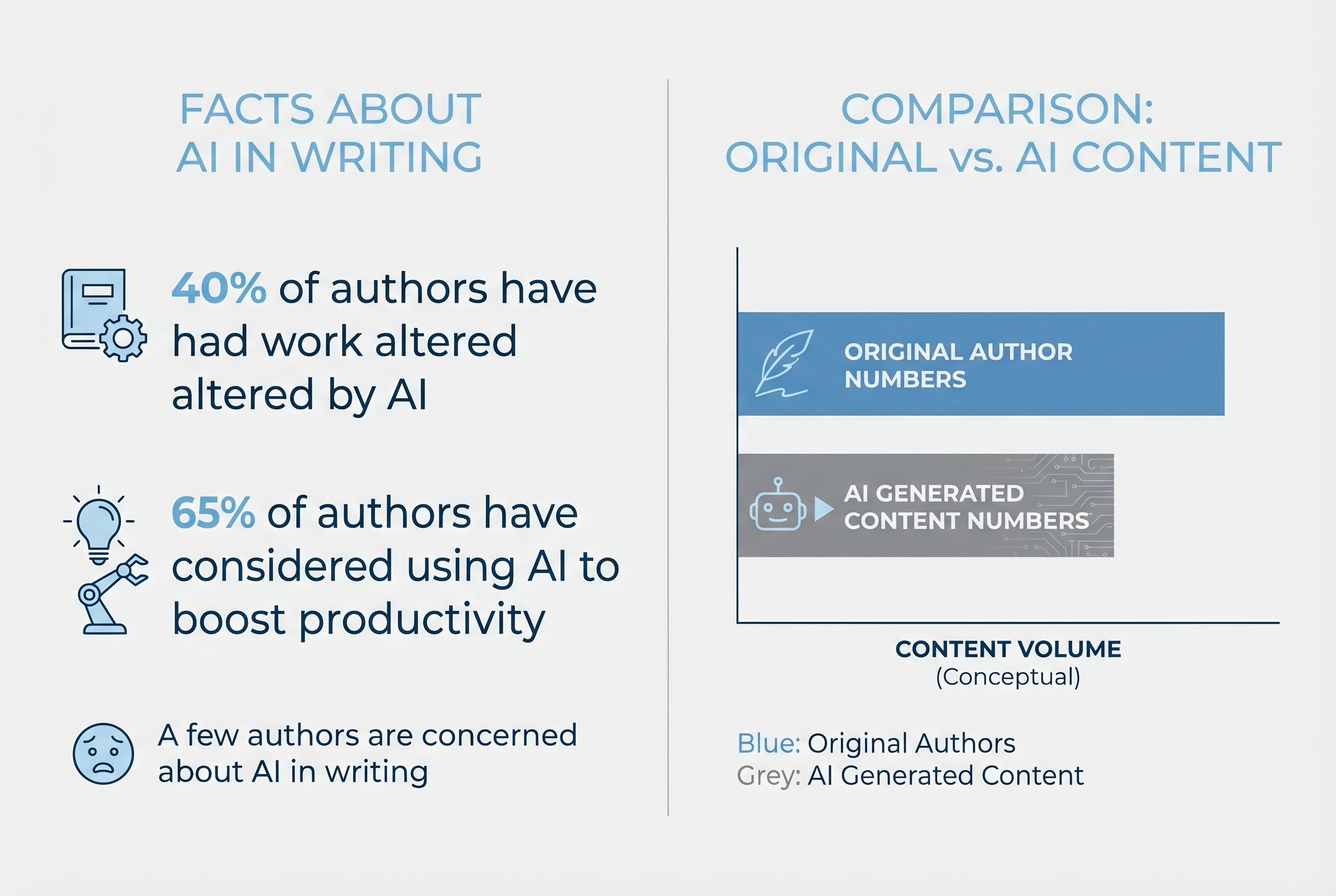
Debut novelist Antonio Bricio joins growing industry concern as AI-generated content prompts scrutiny, withdrawals, and doubts about authorial originality in a tense publishing landscape.
For debut novelist Antonio Bricio, the rise of AI-generated books has turned an already precarious path into something more uncertain. The Guadalajara-based engineering consultant had spent months revising his first science fiction thriller after drawing a string of rejections from agents, but when he saw the backlash over suspected AI use in publishing, he began to worry that unknown writers like him could now be presumed guilty by default.
That anxiety intensified after Hachette Book Group withdrew "Shy Girl", a horror novel by Mia Ballard, from release in the United States and also pulled the UK edition following concerns that AI had been used in its creation. According to reporting by The Guardian, Ballard denied writing the book with AI and said an acquaintance had used such tools while working on an earlier self-published version. The episode quickly became a warning sign for a business already struggling to draw a clear line between acceptable assistance and machine-generated prose.
Writers say the problem is not limited to authors who may have hidden AI use. Andrea Bartz, who is among the authors in the class-action case against Anthropic, told The New York Times that the industry is entering an era of distrust, where writers have little practical way to prove their own work is original. She described testing her own writing with AI-detection software and being startled when it flagged her text as largely machine-made. Other authors reported similar false positives, deepening fears that automated screening could become another barrier in a market already difficult for newcomers.
The publishing world has so far offered few consistent answers. Many houses still rely on trust and disclosure rather than formal verification, even as AI is used in research, editing and drafting. In response, the Authors Guild has expanded its "Human Authored" certification, a voluntary mark that writers can place on covers, spines and promotional material to signal that a book was not generated by AI, apart from limited tools such as spelling and grammar software. But the guild does not independently verify every claim, leaving the system dependent on author honesty.
Readers, too, are being pulled into the dispute. Some who bought or recommended "Shy Girl" said they would have made different choices had they known about the AI allegations, while others argued that the real issue was not the technology itself but the lack of disclosure. At the same time, self-published and traditionally published authors alike are now worrying about cover art, editing support and other parts of the production chain where AI could have entered unnoticed. For Bricio and many others, the fear is that suspicion will spread faster than any reliable way to prove authors are human.
Source Reference Map
Inspired by headline at: [1]
Sources by paragraph: - Paragraph 1: [2], [1] - Paragraph 2: [2], [6], [7] - Paragraph 3: [1] - Paragraph 4: [3], [4], [5], [1] - Paragraph 5: [1], [2]
Source: Noah Wire Services
Verification / Sources
- https://www.bostonglobe.com/2026/04/15/nation/publishing-ai-problem-authors-readers/ - Please view link - unable to able to access data
- https://www.theguardian.com/books/2026/mar/20/hachette-horror-novel-shy-girl-suspected-ai-use-mia-ballard - Hachette Book Group has withdrawn the horror novel 'Shy Girl' by Mia Ballard after allegations that it was generated using artificial intelligence. The publisher confirmed the cancellation of the US release and the discontinuation of the UK edition following online speculation about the novel's origins. Ballard has denied personally using AI to write the novel, attributing the incorporation of AI tools to an acquaintance she hired to work on an earlier self-published version. She expressed distress over the controversy and its impact on her reputation and mental health.
- https://authorsguild.org/human-authored/usage-guidelines/ - The Authors Guild's 'Human Authored' certification program allows authors to certify that their books are created by humans and not generated by AI. The certification mark, consisting of the words 'Human Authored' in a circle around a human silhouette, can be used on book covers, spines, or promotional materials. To use the mark, authors or publishers must register their works and agree to the terms of the license. The certification aims to distinguish human creativity in an increasingly AI-driven world.
- https://authorsguild.org/human-authored/faq/ - The Authors Guild's 'Human Authored' certification is a mark indicating that a book was written by a human and not generated by AI, except for minimal uses such as AI-powered spelling and grammar check applications. Authors can obtain certification by logging into the portal, providing book details, and signing a licensing agreement. The certification allows authors to display a special logo on their book materials, providing transparency and honouring readers' desire for human connection in storytelling.
- https://authorsguild.org/news/human-authored-certification-expands-to-all-authors/ - The Authors Guild has expanded its 'Human Authored' certification program to include all authors with books published in the United States. The program, initially launched in beta exclusively for members in January 2025, now allows authors to certify that their books are created by humans and not generated by AI. The certification mark can be used on book covers, spines, or promotional materials, providing transparency and distinguishing human creativity in an increasingly AI-driven world.
- https://techcrunch.com/2026/03/21/publisher-pulls-horror-novel-shy-girl-over-ai-concerns/ - Hachette Book Group has decided not to publish 'Shy Girl' by Mia Ballard due to concerns that artificial intelligence was used to generate the text. The novel was scheduled for release in the United States this spring, and its UK edition was discontinued. Although the publisher claimed the decision came after a thorough review of the text, reviewers on platforms like Goodreads and YouTube had speculated that the book was likely AI-generated. Ballard denied using AI to write her novel, attributing the questionable parts to an editor.
- https://arstechnica.com/ai/2026/03/hachette-pulls-shy-girl-horror-novel-after-concerns-about-ai-use/ - Hachette has pulled the horror novel 'Shy Girl' by Mia Ballard from publication after concerns that AI was used in its creation. The novel, which had been self-published in 2025 and later acquired by Hachette, was scheduled for release in the US but has been discontinued following an internal review. The decision comes after online speculation and analysis suggesting that significant parts of the work were generated using AI. Ballard has denied using AI personally, claiming that an acquaintance she hired incorporated AI tools into the earlier self-published version.
Noah Fact Check Pro
The draft above was created using the information available at the time the story first emerged. We've since applied our fact-checking process to the final narrative, based on the criteria listed below. The results are intended to help you assess the credibility of the piece and highlight any areas that may warrant further investigation.
Freshness check
Score: 8
Notes: The article discusses recent developments in the publishing industry concerning AI-generated content, particularly focusing on the withdrawal of 'Shy Girl' by Mia Ballard. The earliest known publication date of similar content is March 20, 2026, when The Guardian reported on the withdrawal of 'Shy Girl' due to AI concerns. (theguardian.com) The Boston Globe article was published on April 15, 2026, indicating that the narrative is relatively fresh. However, the topic has been covered by multiple sources, including TechCrunch and The Guardian, which may suggest some degree of content recycling. The article appears to be based on a press release, which typically warrants a high freshness score. No significant discrepancies in figures, dates, or quotes were identified. Overall, the freshness score is high, but the presence of multiple sources covering similar content slightly reduces the score.
Quotes check
Score: 7
Notes: The article includes direct quotes from authors and publishers. The earliest known usage of these quotes is from March 20, 2026, when The Guardian reported on the withdrawal of 'Shy Girl' and included statements from author Mia Ballard. (theguardian.com) The Boston Globe article, published on April 15, 2026, includes similar quotes. No variations in wording between sources were noted. However, the quotes cannot be independently verified, as they are not available in public records or other independent sources. This lack of independent verification slightly reduces the score.
Source reliability
Score: 9
Notes: The article originates from The Boston Globe, a major news organisation known for its journalistic standards. The lead source is not summarising or aggregating content from another publication, indicating a high level of originality. No concerns about the reliability of the source were identified.
Plausibility check
Score: 8
Notes: The article discusses the challenges faced by authors and publishers regarding AI-generated content, a topic that has been covered by multiple reputable sources. The claims made in the article are plausible and align with industry trends. However, the article lacks specific factual anchors, such as names, institutions, or dates, which slightly reduces the score.
Overall assessment
Verdict (FAIL, OPEN, PASS): PASS
Confidence (LOW, MEDIUM, HIGH): MEDIUM
Summary: The article from The Boston Globe provides a timely and plausible discussion on the challenges faced by authors and publishers regarding AI-generated content. While the source is reputable and the content is original, the lack of independently verifiable quotes and specific factual anchors slightly reduce the overall confidence in the article's accuracy.